Make a silicone mold of a 3D print — without the box hassle

You have the model. Now you want a silicone mold of it.

The usual way

Glue cardboard or LEGO walls around the model, plug the gaps with hot glue, guess the size — then guess how much silicone to mix.

With 3DGEN

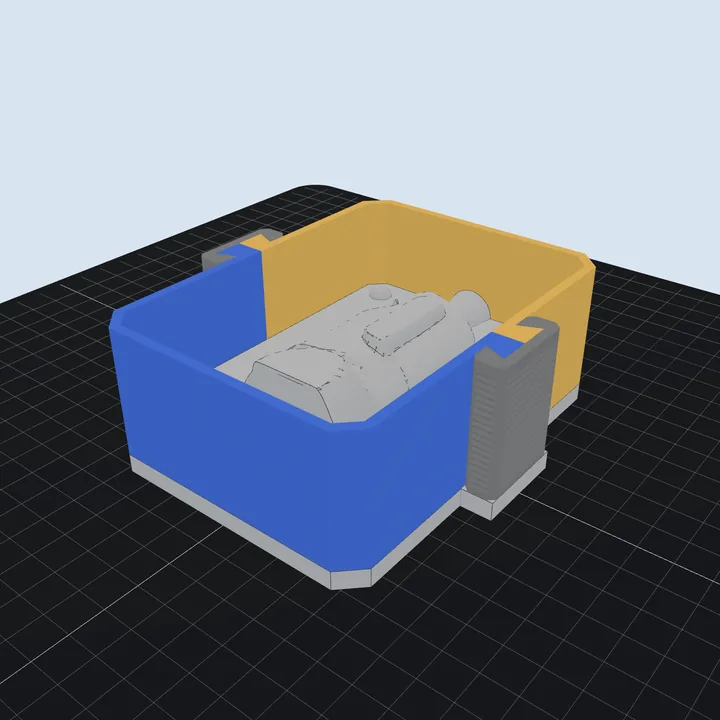
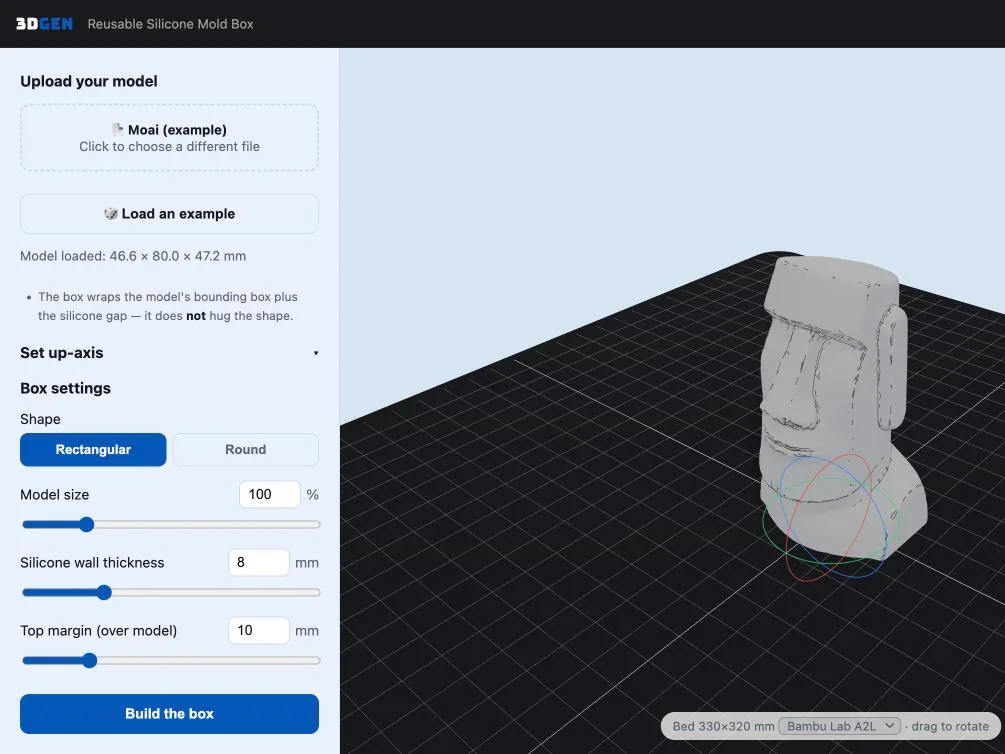
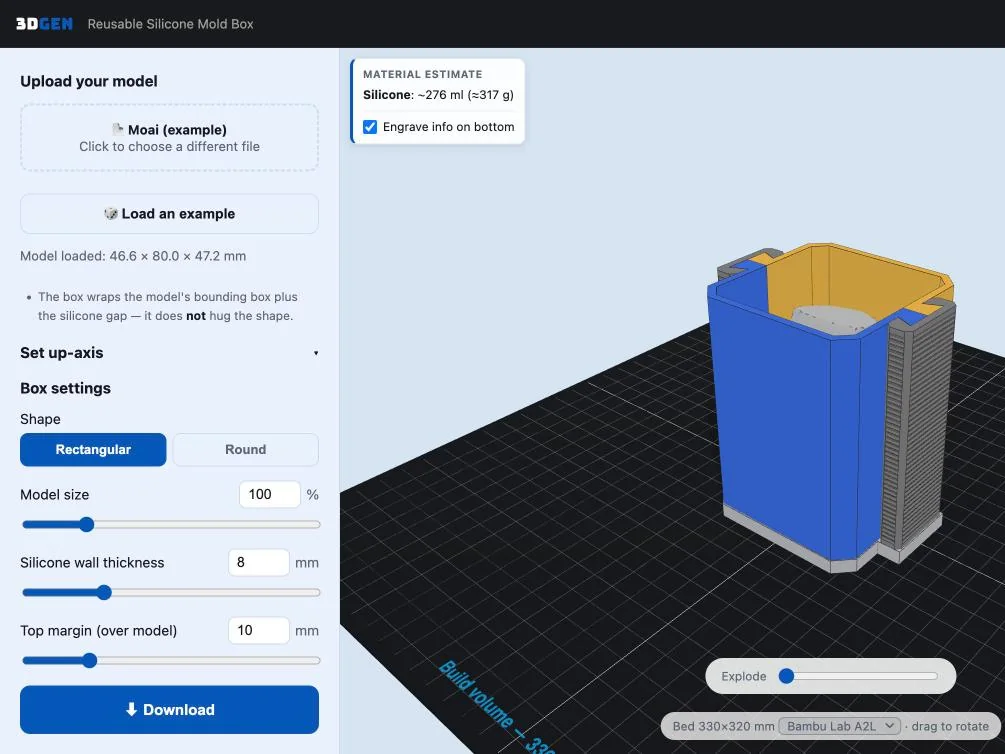
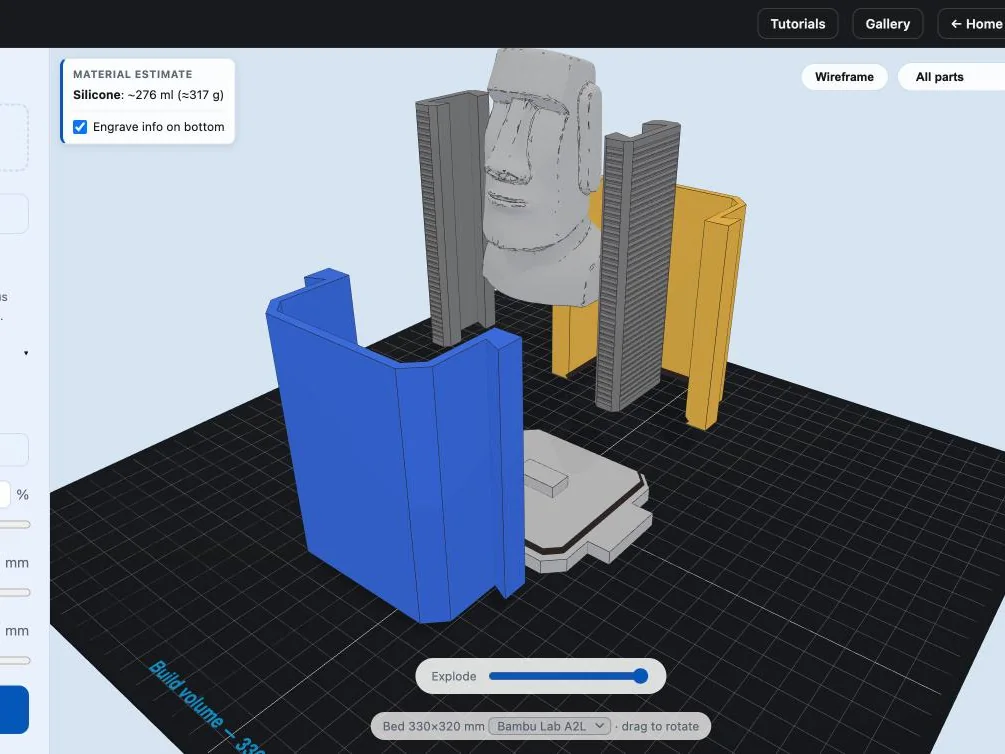
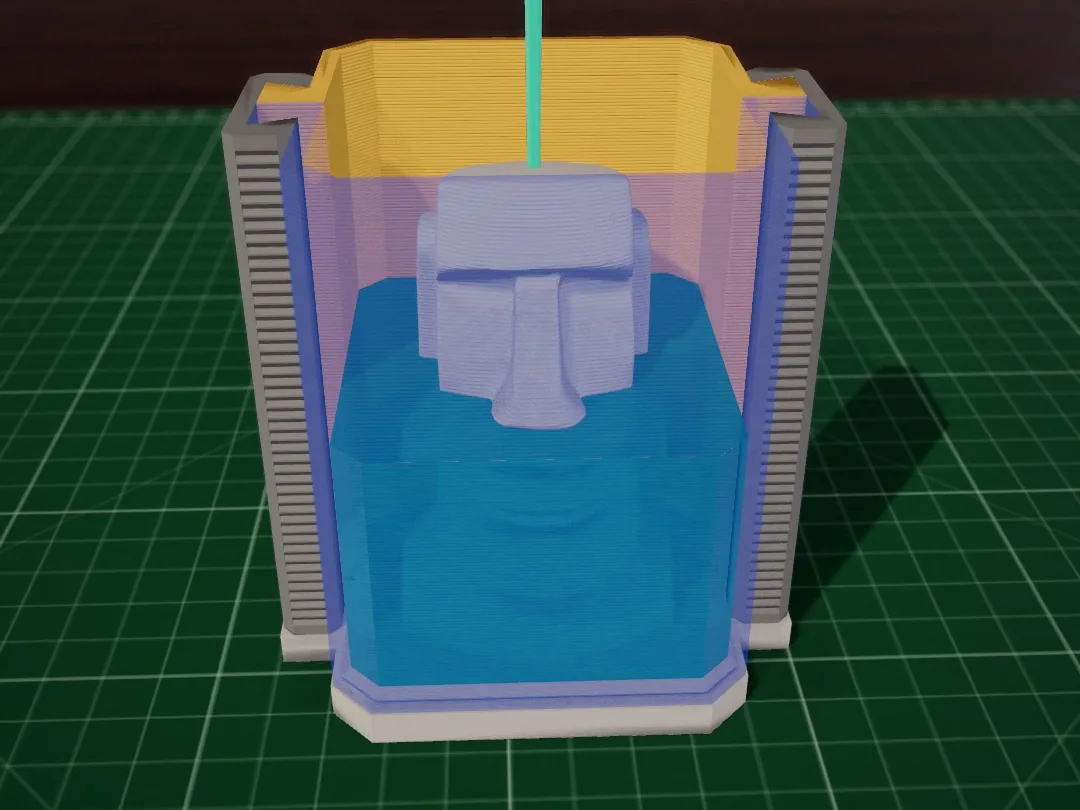
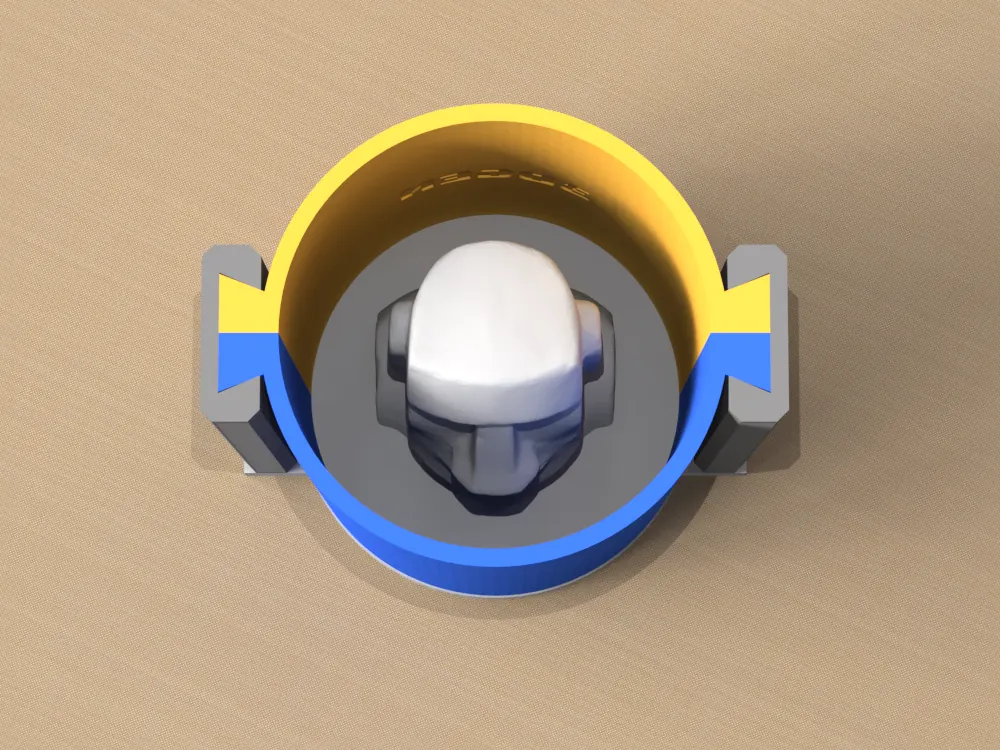
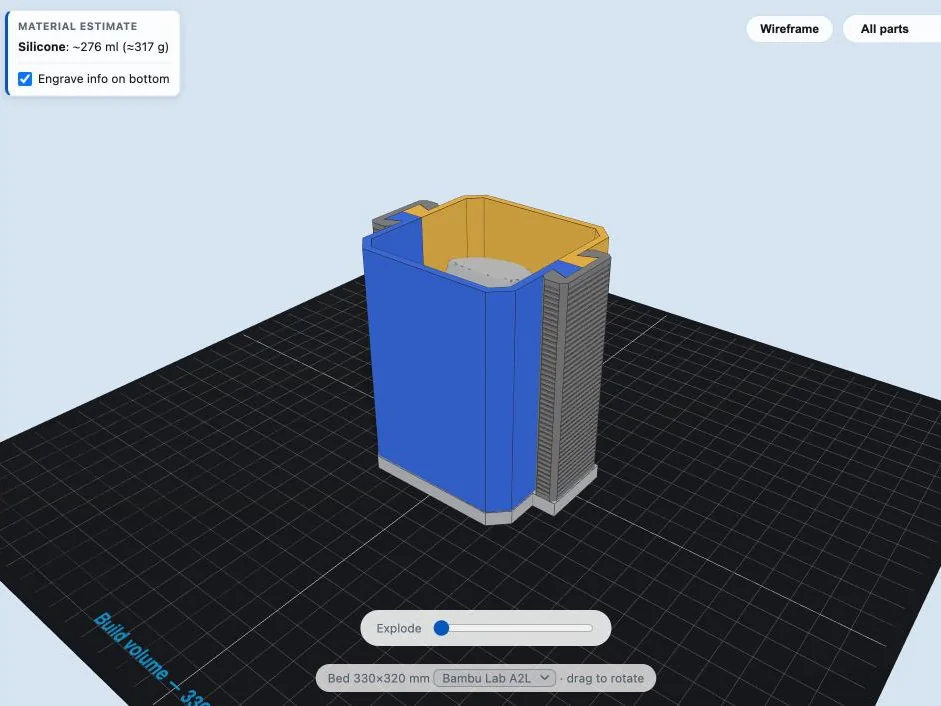
Drop in your STL and get a box sized to it, with locking walls, clamps and the amount of silicone it takes.

Round or square mold box

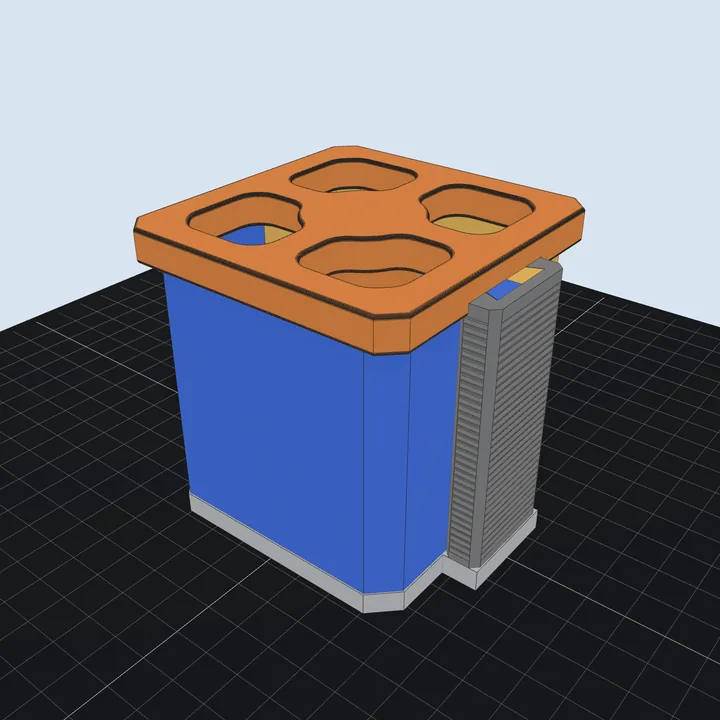
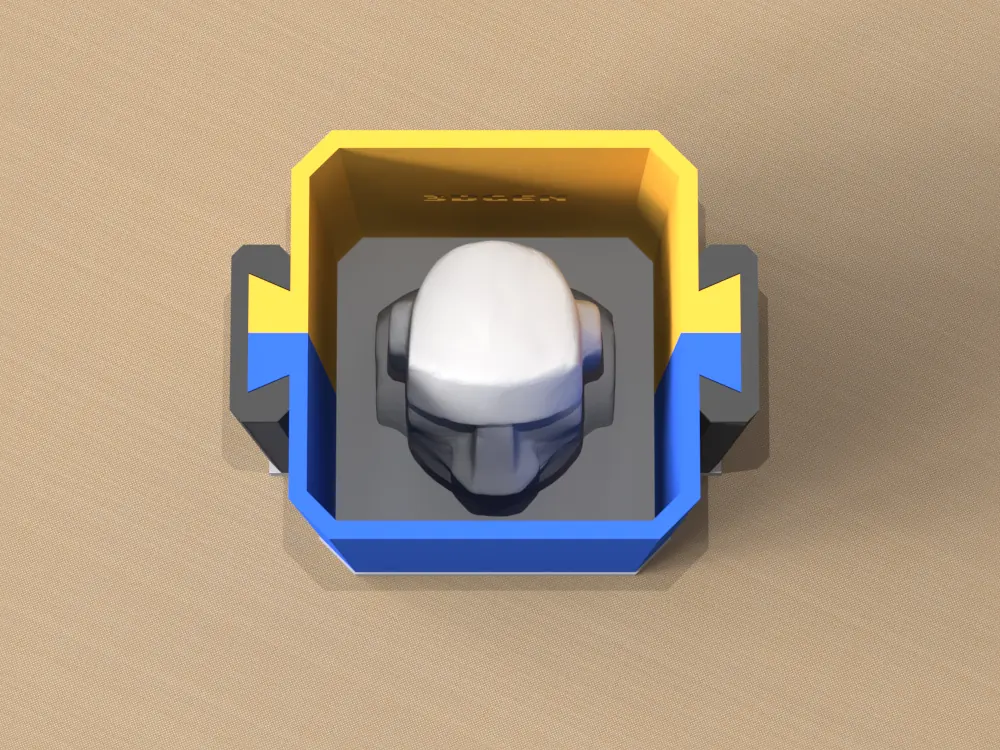
Pick the shape that suits your model. Both come with a base, locking walls and two clamps — the round box simply wraps a circle around the model instead of a rectangle.

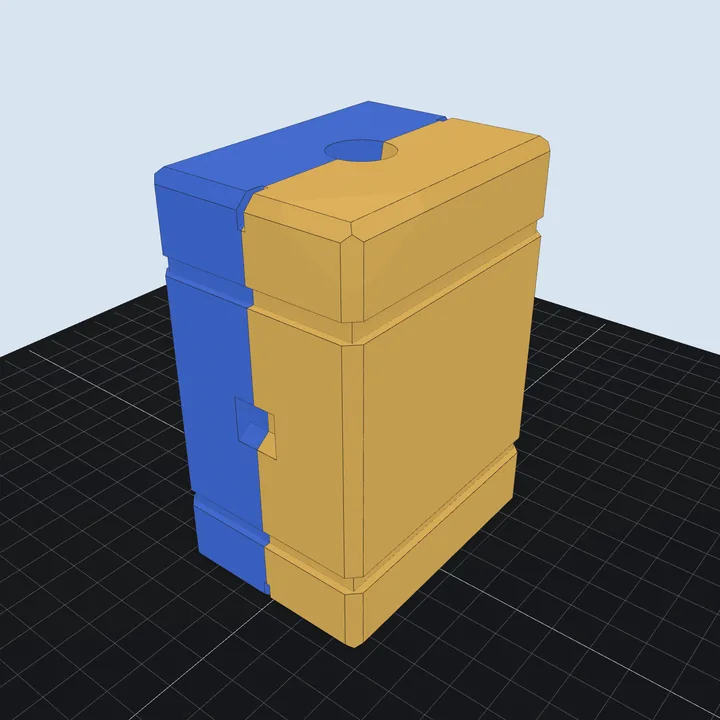
Rectangular 3D printed mold box

Rectangular

For blocky, flat or long models.

Round 3D printed mold box

Round

For round models like vases, figurines and candles.

What you can adjust

  • Shape

    Rectangular or round.

  • Silicone thickness

    2–25 mm around the model, 8 mm by default.

  • Top margin

    2–40 mm of silicone above the model, 10 mm by default.

  • Box wall

    2–10 mm of rigid printed wall, 3 mm by default.

  • Model fixing

    On a pin and socket, or merged into the base, so the model can't float.

  • Fit tolerance

    0.1–0.6 mm at the joints, 0.4 mm by default.

All settings (13)
  • Shape — Rectangular or round.
  • Silicone thickness — 2–25 mm around the model, 8 mm by default.
  • Top margin — 2–40 mm of silicone above the model, 10 mm by default.
  • Box wall — 2–10 mm of rigid printed wall, 3 mm by default.
  • Model fixing — On a pin and socket, or merged into the base, so the model can't float.
  • Fit tolerance — 0.1–0.6 mm at the joints, 0.4 mm by default.
  • Model size — Scale from 50% to 300%.
  • Split direction — Rotate the model with sliders or drag the rings on screen.
  • Fits your bed — Choose your printer and see the bed size on screen.
  • Silicone estimate — Milliliters and grams of silicone for this box.
  • Engraved info — File name and silicone amount on the bottom of the base, on or off.
  • Merged parts — Overlapping bodies in your STL become one solid.
  • Inspect before you print — Explode the parts or view one at a time.

Silicone molds for casting

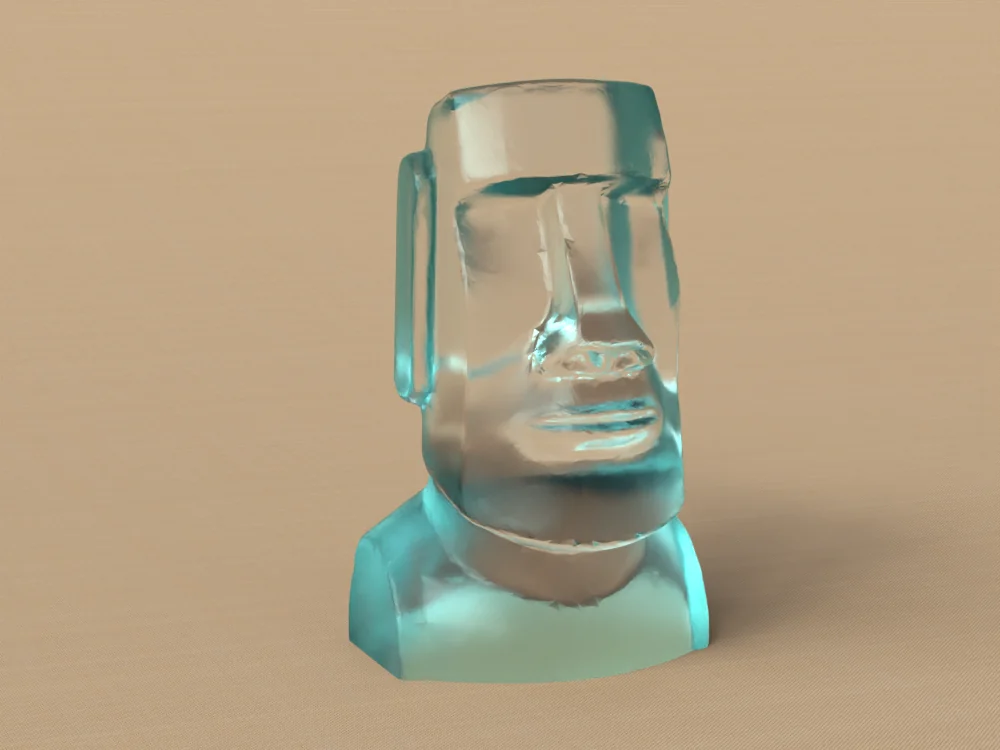
Resin casting from a silicone mold made in a 3D printed box

Silicone mold for resin casting

Silicone is the go-to mold for resin: it's flexible, so you can peel it off detailed parts without breaking them.

Tips
  • Pour slowly from a corner and tap the mold to bring bubbles up.
  • Platinum silicone gives the sharpest, longest-lasting resin molds.
  • Use a mold release if your resin's label recommends it.
Read more →
Soap cast in a silicone mold made in a 3D printed box

Silicone soap molds

A flexible silicone mold lets melt-and-pour soap pop out with fine detail intact.

Tips
  • A quick spritz of isopropyl alcohol pops surface bubbles.
  • Let the soap set fully, then flex the mold to release it.
Read more →
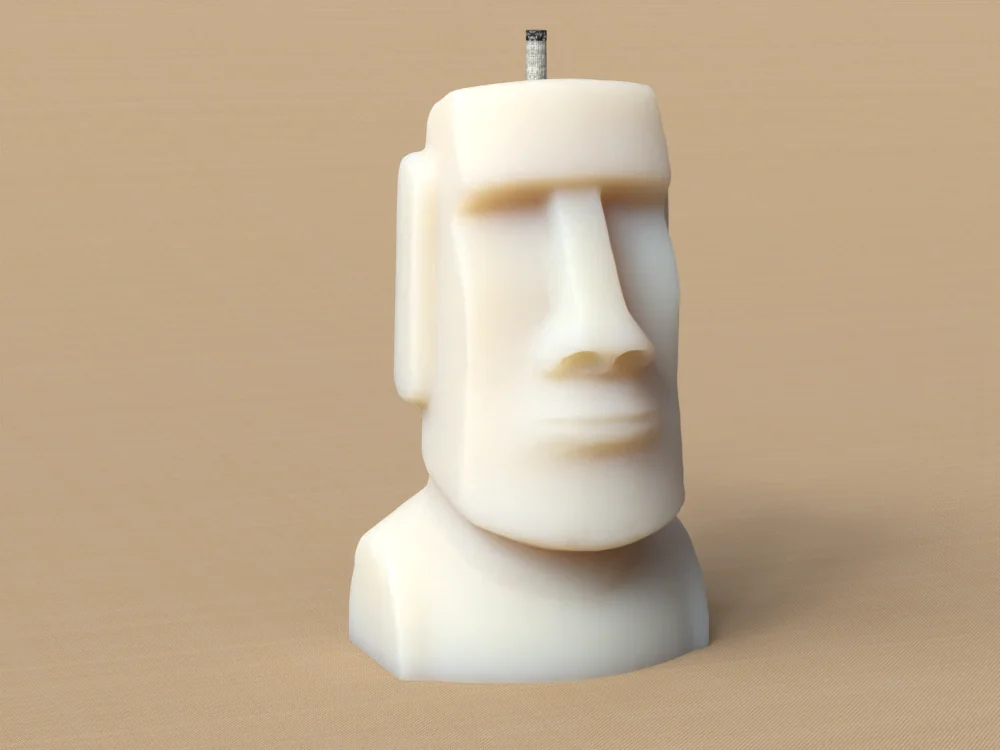
Wax candle cast in a silicone mold made in a 3D printed box

Silicone candle & wax molds

A silicone mold is a classic way to make shaped and pillar candles.

Tips
  • Pour at the low end of your wax's temperature range.
  • Pierce a small wick hole through the bottom of the silicone mold with a needle.
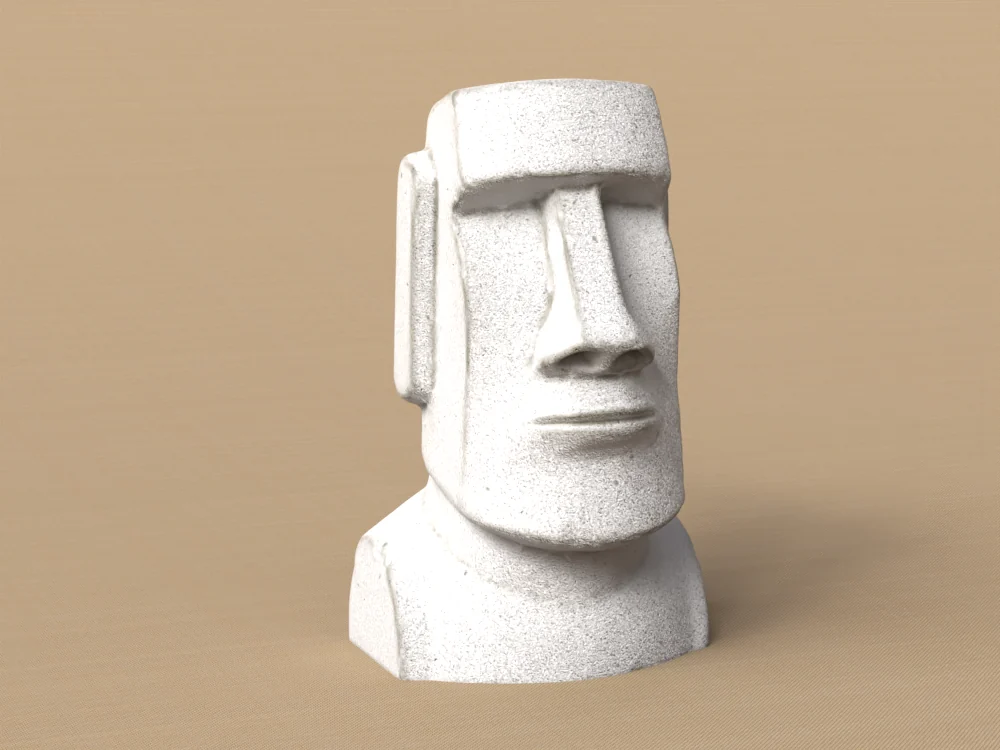
Plaster cast from a silicone mold made in a 3D printed box

Silicone molds for plaster & Jesmonite

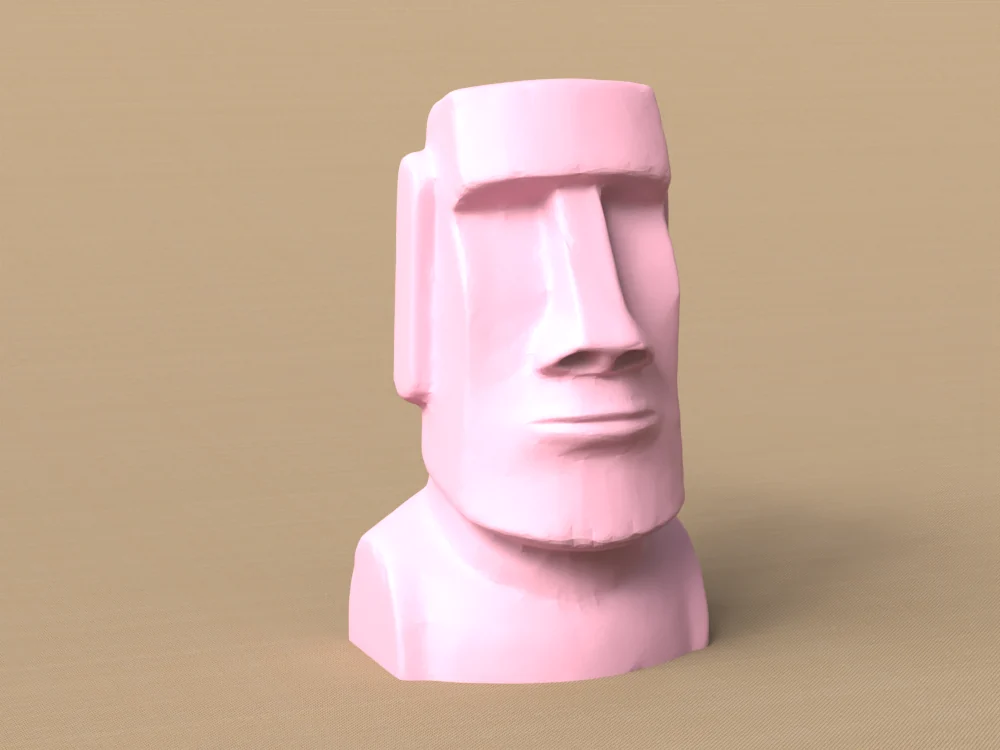
Plaster and Jesmonite pick up fine detail in a flexible mold and come out without breaking it.

Tips
  • Tap the mold after pouring so trapped air rises out.
  • Let the cast set fully before flexing it out, and dry it slowly, away from direct heat.
Read more →

One-part or two-part mold?

This generator makes a box for an open, one-part silicone mold: you pour from the top and peel the mold off the cast. Need a rigid two-part mold you print directly, with no silicone? Try the Mold maker →

Make your silicone mold box now

Open the Mold Box Generator — free

Free account — 5 downloads every week.

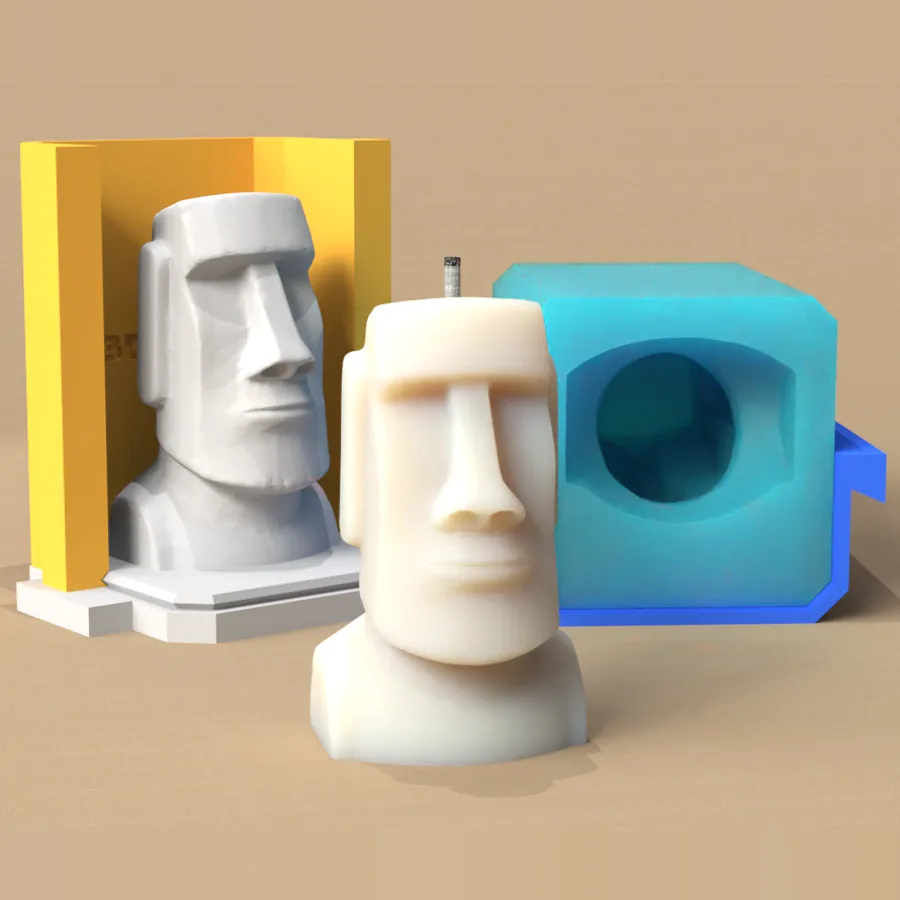
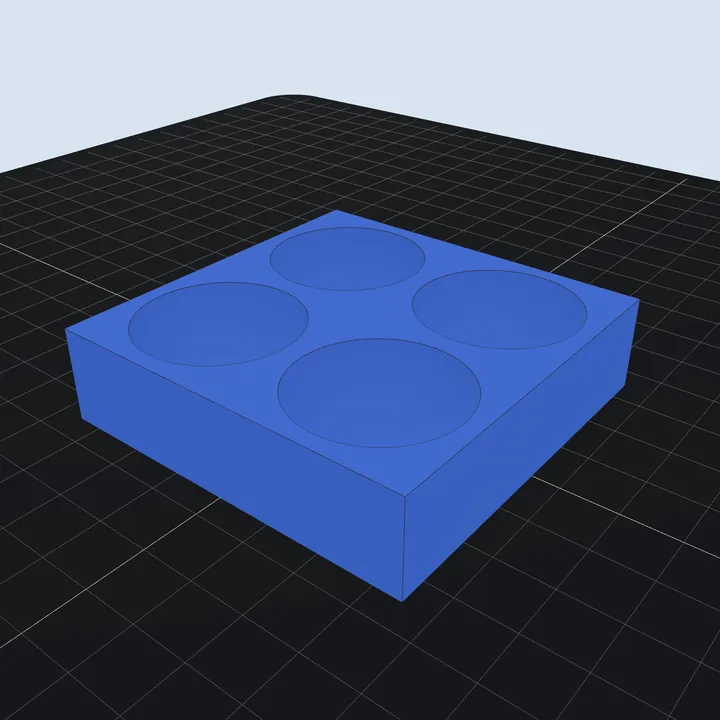
Printed mold box with a cured silicone mold and a cast