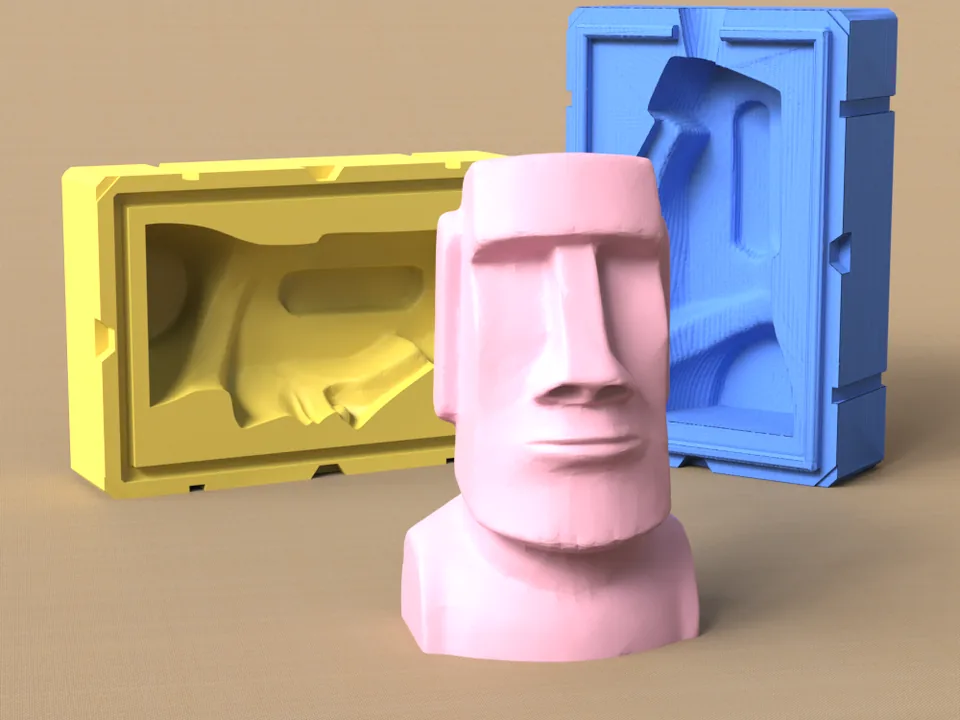
Make a mold from a 3D model — without CAD

You have the model. Now you want copies in resin, wax or concrete.

The usual way

Learn Fusion 360, fight Blender for an evening, or stack boolean tricks in your slicer and hope the halves line up.

With 3DGEN

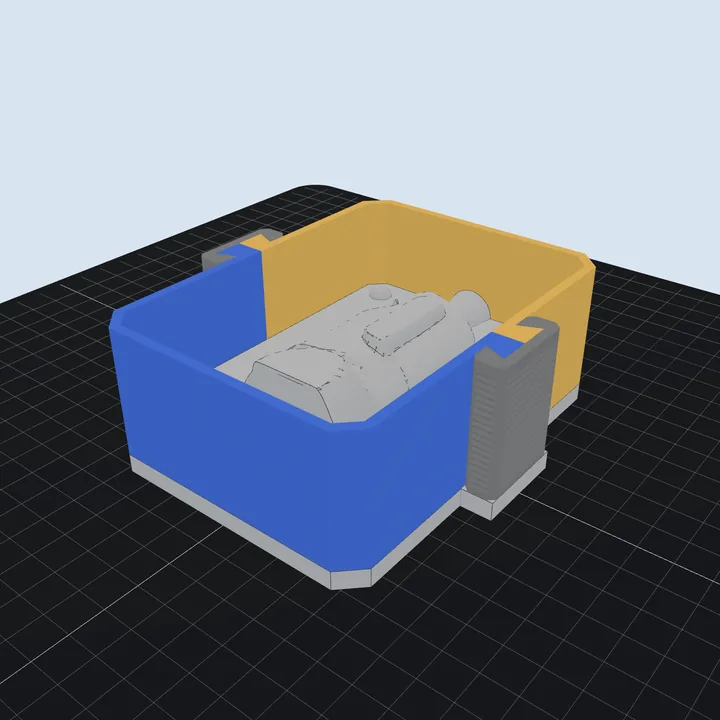
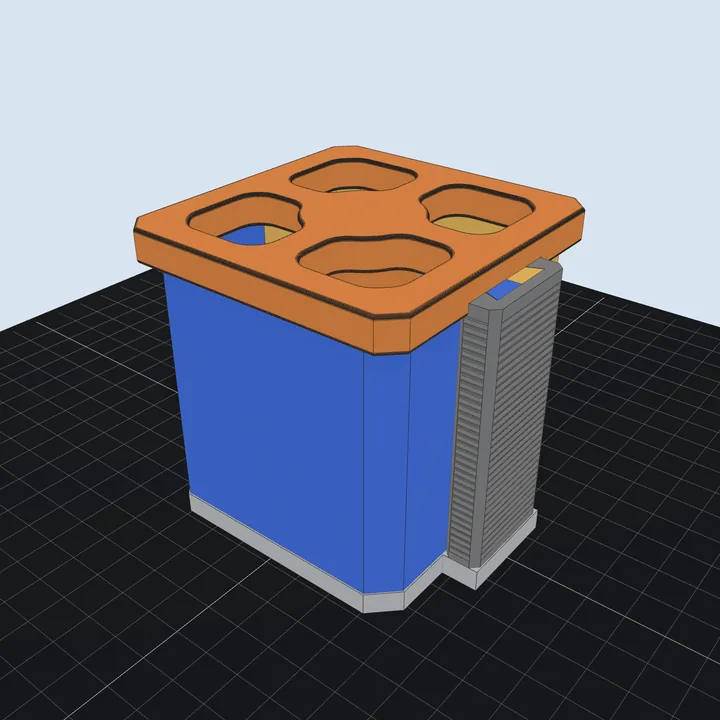
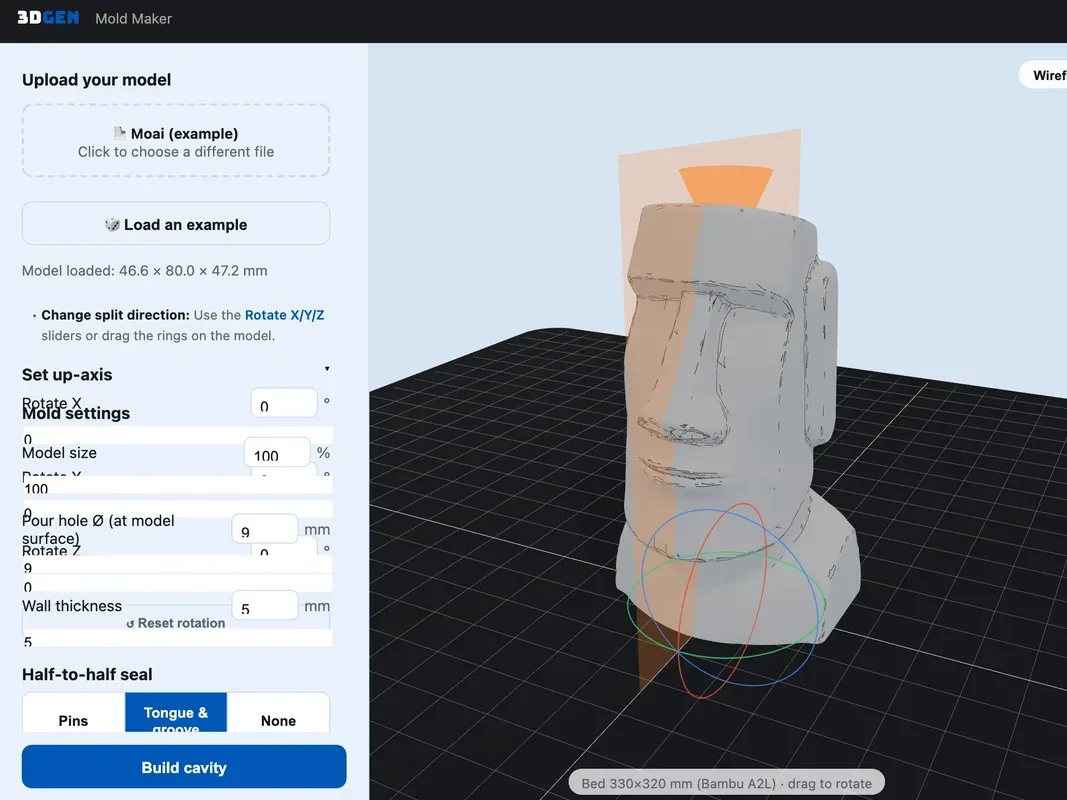
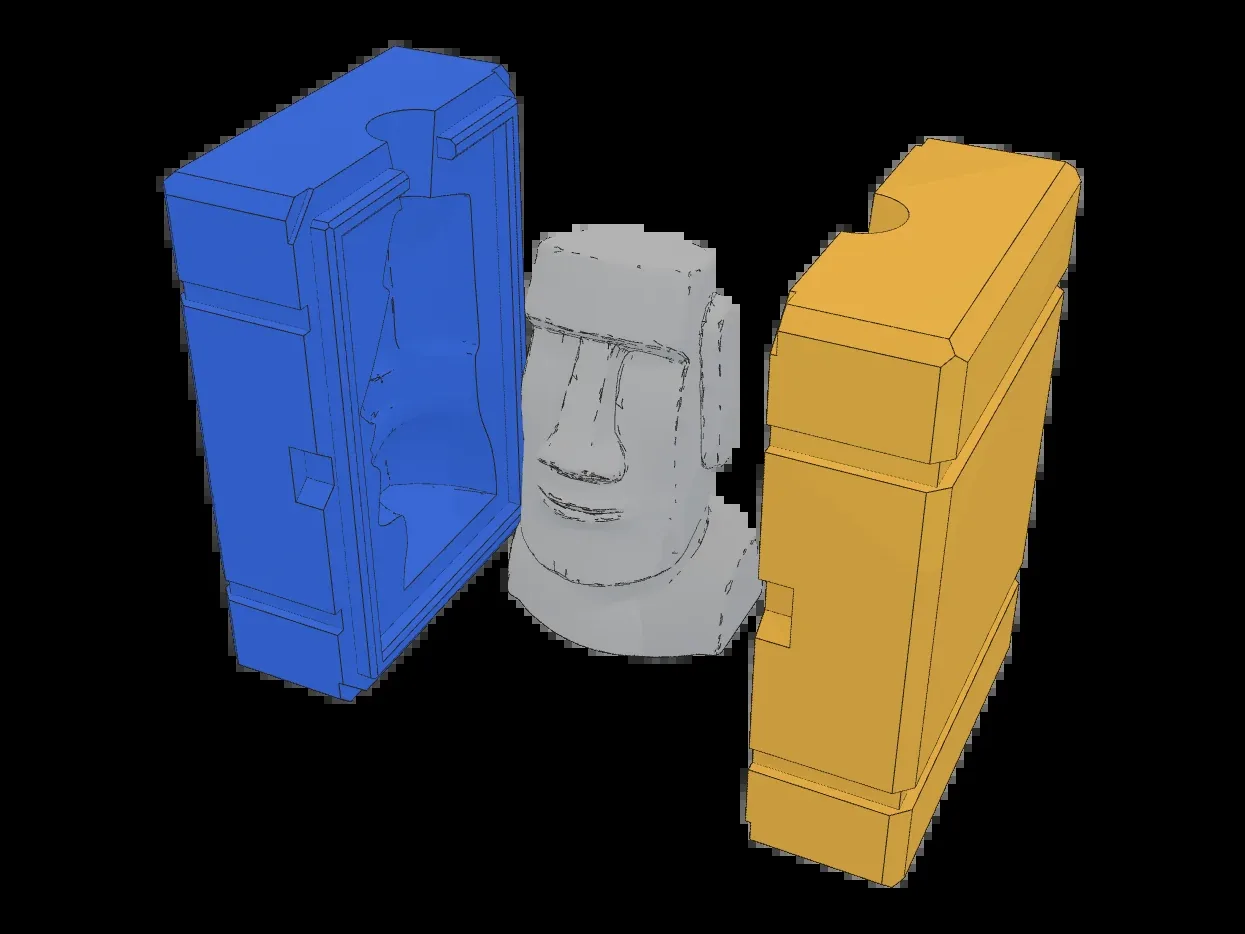
Drop in your STL, check the split, download the two halves. The block, cavity, pour hole and keys are built for you.

What you can adjust

  • Split direction

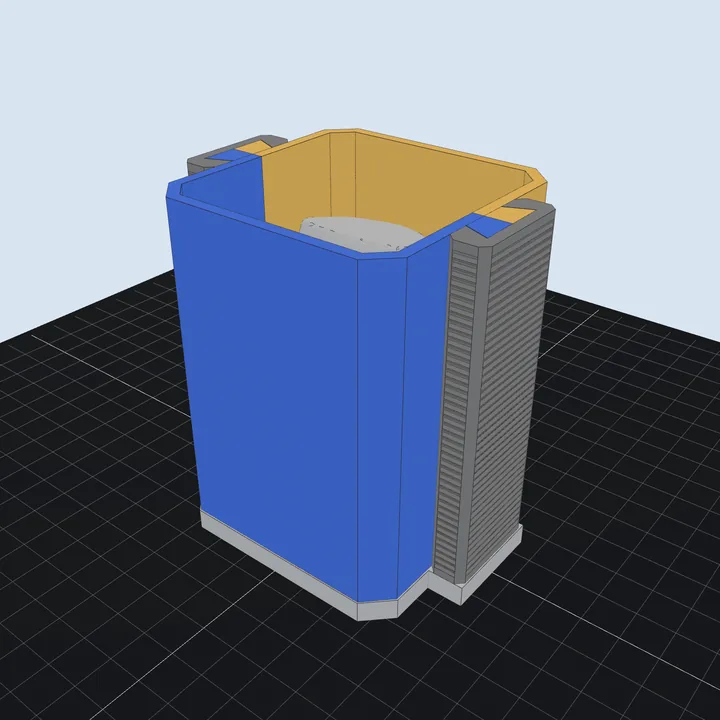
    Rotate the model with sliders or drag the rings on screen; a live plane shows where it will split.

  • Pour hole

    4–20 mm opening, moved along the seam to where you want to pour.

  • Wall thickness

    3–10 mm of rigid printed wall.

  • Pins or tongue & groove

    Tongue & groove seals liquids best; pins are simpler for rigid casts.

  • Fit clearance

    0.1–0.5 mm gap so printed parts actually fit together.

  • Material estimate

    How much wax, resin, plaster or concrete to mix.

All settings (12)
  • Split direction — Rotate the model with sliders or drag the rings on screen; a live plane shows where it will split.
  • Seam position — Slide the split plane off-center.
  • Pour hole — 4–20 mm opening, moved along the seam to where you want to pour.
  • Wall thickness — 3–10 mm of rigid printed wall.
  • Pins or tongue & groove — Tongue & groove seals liquids best; pins are simpler for rigid casts.
  • Fit clearance — 0.1–0.5 mm gap so printed parts actually fit together.
  • Rubber-band channels — Grooves that keep bands from slipping.
  • Finger pockets & pry slots — Thumb notches and coin slots to open the mold without damage.
  • Model size — Scale from 50% to 300%.
  • Fits your bed — Choose your printer and see the bed size on screen.
  • Material estimate — How much wax, resin, plaster or concrete to mix.
  • Inspect before you print — Explode the halves or view one part at a time.

3D printed molds for casting

Resin casting from a 3D printed two-part mold

3D printed mold for resin casting

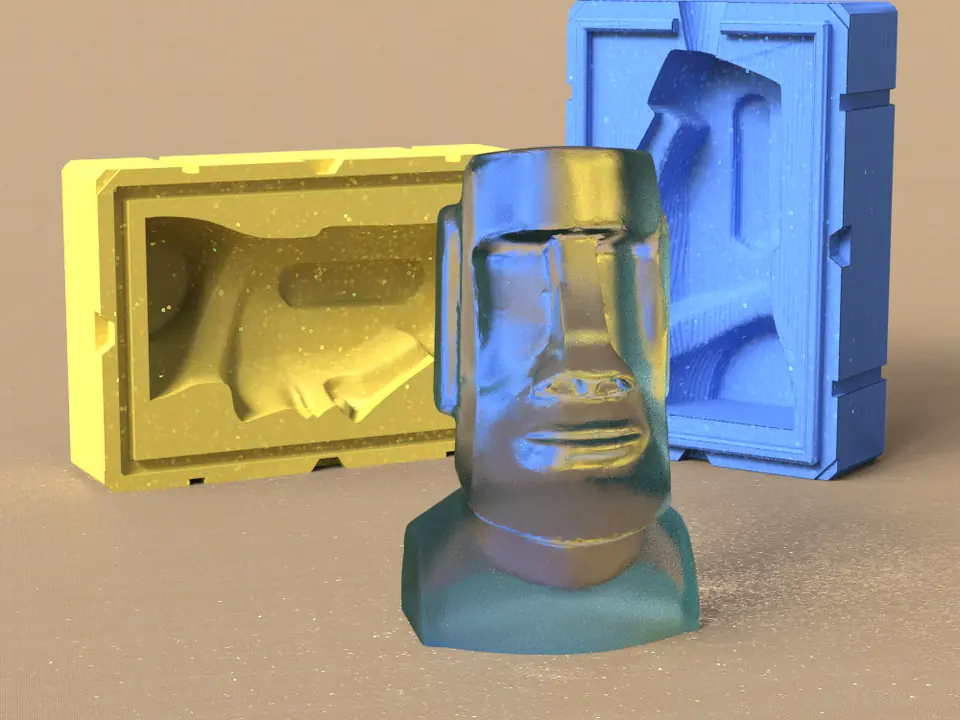
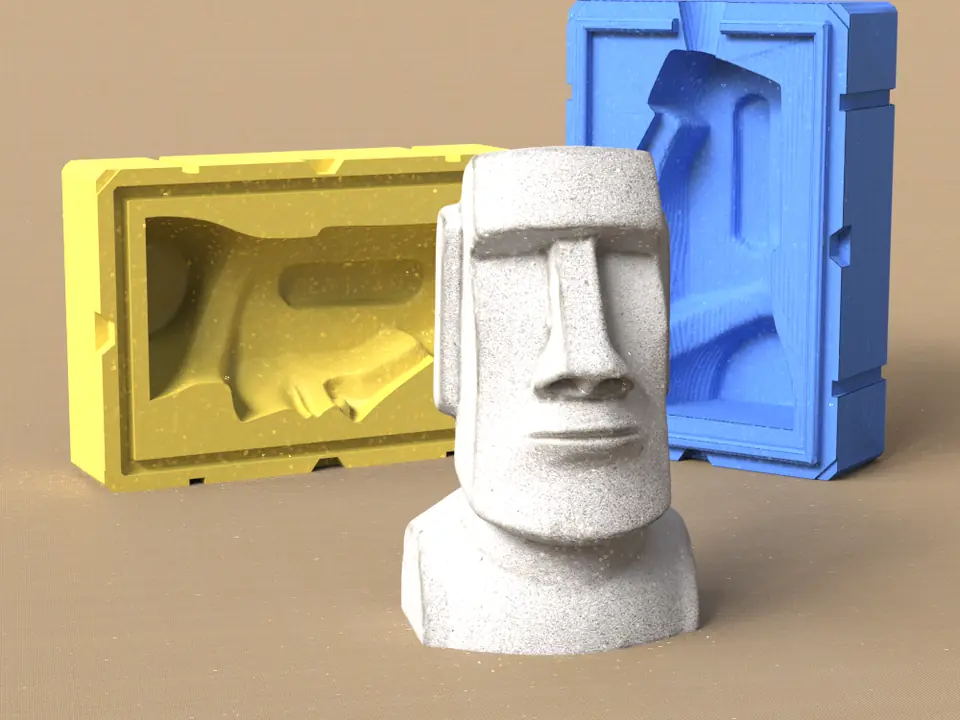
Resin is one of the most popular things to cast in a printed mold. The two-part box mold works best for shapes that pull apart cleanly along one seam, like figurines, knobs and display pieces. Choose tongue & groove so the seam holds liquid.

Tips
  • Resin bonds to layer lines — use a mold release every time.
  • PLA or PETG both work; smoother inner walls mean a smoother casting.
  • Pour slowly from a corner and tap the mold to bring bubbles up.
Read more →
Concrete casting from a 3D printed two-part mold

3D printed concrete & plaster molds

Concrete takes a printed mold well: it cures cold, so plain PLA is fine and PETG lasts longer. For thick mixes, open the pour hole wide.

Tips
  • Coat the inside with a release agent before pouring.
  • Tap and vibrate the mold so trapped air rises out.
  • Let it cure slowly and stay moist; rushing it causes cracks.

Plaster works the same way — dry it slowly and evenly, away from direct heat.

Read more →
Soap casting from a 3D printed two-part mold

3D printed soap molds

Melt-and-pour soap isn't as hot as wax, so a rigid printed mold works. It suits soaps with a raised shape or logo that you want to repeat exactly.

Tips
  • PETG is the safe pick; PLA works if you pour on the cooler side.
  • A quick spritz of isopropyl alcohol pops surface bubbles.
  • Use a light release and a tap to demold.
Read more →
Wax candle cast in a 3D printed two-part mold

3D printed candle & wax molds

Two-part molds are a classic way to make pillar and shaped candles.

Tips
  • Print in PETG, ABS or ASA — PLA starts to soften around 60 °C.
  • Pour at the low end of your wax's temperature range.
  • Band the halves tight and seal the seam with a little removable clay.
Read more →

Questions before you print

Is it really free?

Yes. You can make molds and download your first 3 files without an account. A free account gives you 5 downloads every week.

Do I need CAD, Fusion 360 or Blender?

No. You upload an STL and adjust the mold with sliders. The block, cavity, pour hole and alignment keys are generated for you.

Can I pour hot wax into a PLA mold?

Not safely for most waxes. PLA starts to soften around 60 °C, and many waxes are poured hotter than that, so the mold can warp. Print candle molds in PETG, ABS or ASA, and pour at the low end of your wax's range.

Read more →

Will resin stick to a 3D printed mold? Do I need mold release?

Yes, resin grips layer lines and can lock into the plastic, so use a mold release every time. Smoother inner walls also help the casting come out clean.

Read more →

How do I hide layer lines on the casting?

Every layer line in the mold shows up on the casting. Print the mold with a lower layer height and more wall perimeters, then sand or coat the inside of the cavity before you cast.

Will the mold fit my printer bed?

Choose your printer in the generator and the bed outline on screen matches it, so you can see whether the halves fit before you download. If they don't, scale the model down or reduce the wall thickness.

Why did my plaster crack while drying?

Almost always because it dried too fast or unevenly — heat or airflow on one side makes one face shrink before the other. Dry plaster slowly and evenly, away from direct heat.

Read more →

Do my files get uploaded anywhere?

No. The mold is built in your browser, on your own device. Your STL is never sent to a server.

Turn your STL into a mold now

Open the Mold Maker — free

Free account — 5 downloads every week.

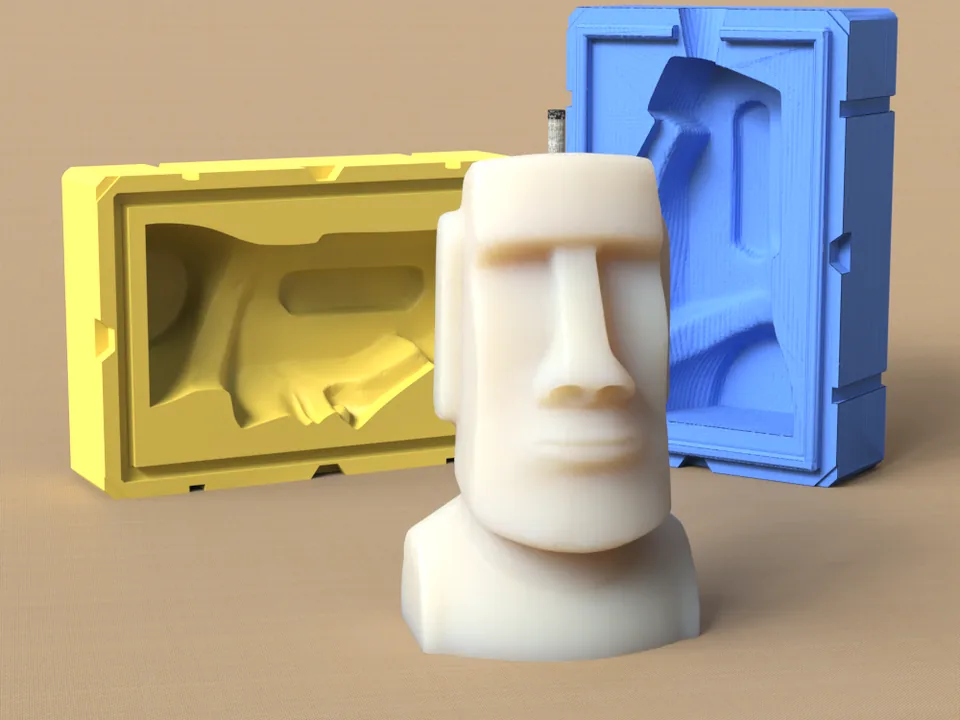
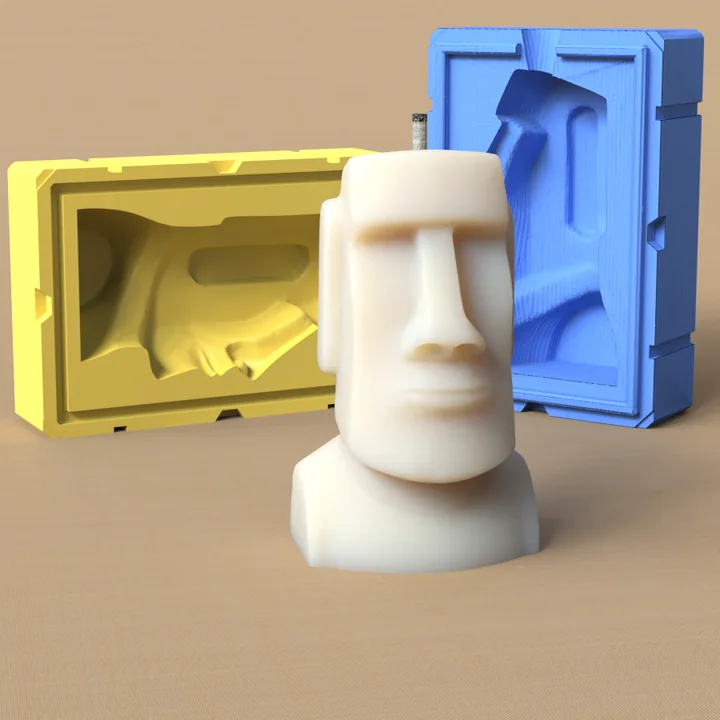
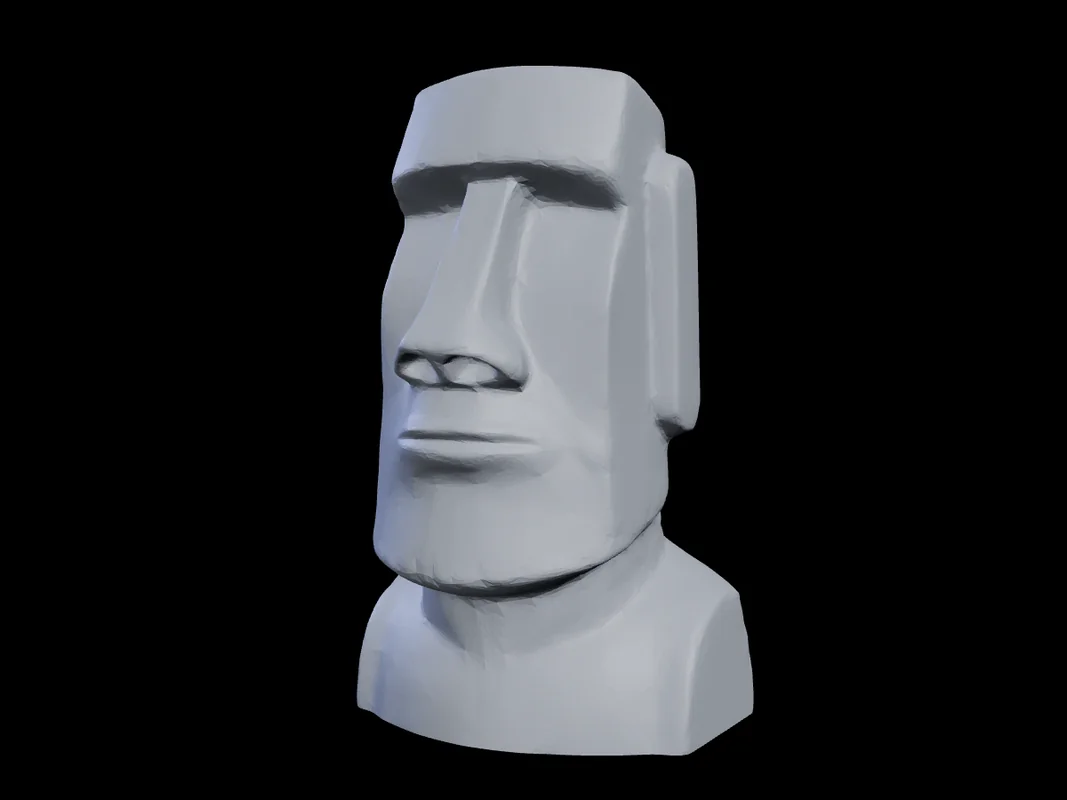
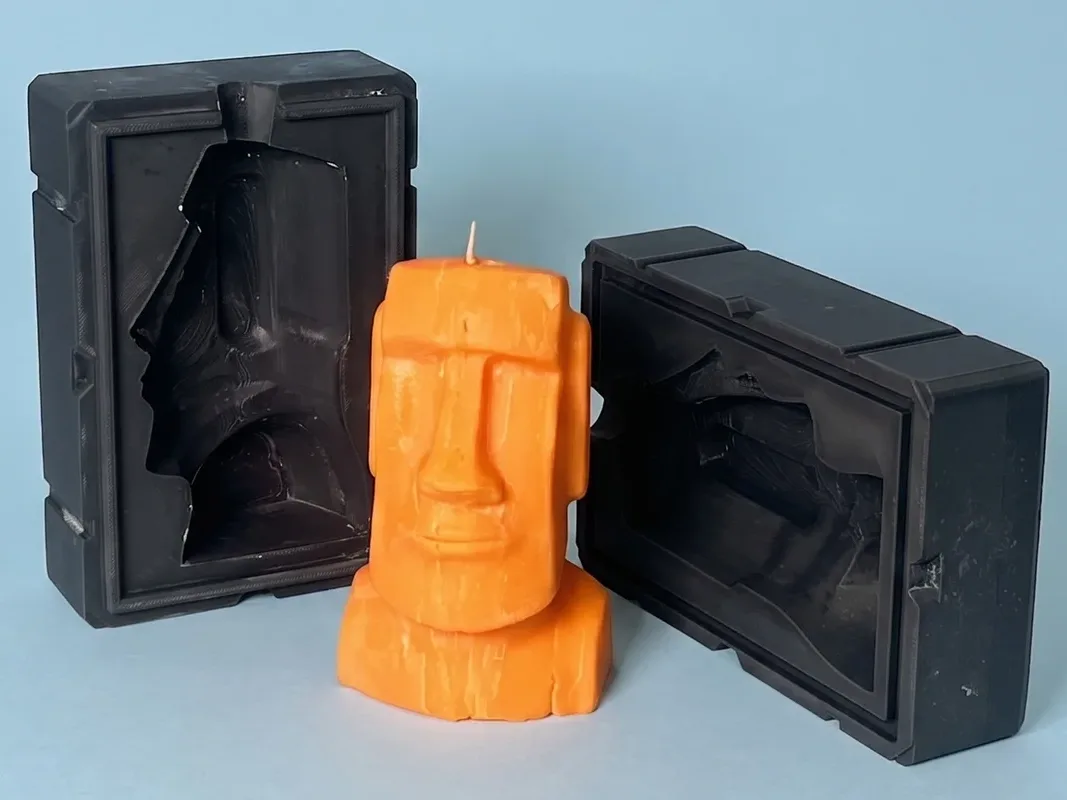
Two open printed mold halves with the cavity visible and a wax Moai candle cast in them